



What Is Cactus Leather? The Plant-Based Material Changing Luxury Footwear
Published by AVAR Earth · Sustainable Material Science Series
If you've landed here, you're probably wondering whether cactus leather is real — and whether it's as good as it sounds. The short answer: yes, and yes. But the longer answer is worth knowing, especially if you care about what you're putting on your feet and leaving behind on the planet.
At AVAR Earth, our Cactus Collection is built entirely from Desserto® — a mature, commercially proven cactus-based leather alternative developed in Mexico. This post covers everything: what it is, how it's made, how it compares to animal leather and other vegan materials, and whether it's right for you.
What Is Cactus Leather?
Cactus leather is a bio-based material made from the fibres of the nopal cactus (Opuntia ficus-indica), also known as the prickly pear. It was pioneered by Adrián López Velarde and Marte Cázarez, two Mexican designers who wanted to create a genuinely sustainable leather alternative — not just a synthetic plastic substitute.
The commercial product, Desserto®, launched in 2019 and has since been adopted by luxury brands globally. It is certified organic, partially biodegradable, and free of phthalates, PVC, and toxic chemical finishing agents.
How Is Cactus Leather Made?
The production process is strikingly low-impact compared to both animal leather and conventional synthetic alternatives.
Step 1 — Cultivation. Nopal cactus grows wild across semi-arid regions of Mexico. It requires no irrigation (rainwater is sufficient), no pesticides, and no herbicides. The cactus regenerates after harvest, making it a perennial crop. A single hectare of nopal absorbs approximately 8,100 tonnes of CO₂ per year.
Step 2 — Harvesting. Only mature leaves are cut — the plant continues growing. This is a key difference from conventional leather, where the entire animal is used, and from some synthetic materials where entire feedstock batches are processed together.
Step 3 — Drying. Harvested leaves are sun-dried for three days to remove excess moisture. No artificial drying energy is required.
Step 4 — Processing. Dried cactus fibres are combined with non-toxic binding agents to create a flexible, durable material with a texture that closely resembles split-grain leather.
Step 5 — Finishing. The material is finished without heavy metals, PVC, or phthalates — the toxic finishing compounds found in most synthetic leathers and many conventional ones.

The result is a material that is:
- Partially biodegradable (the cactus fibre component)
- Breathable and flexible
- Water-resistant
- Durable for 10+ years with proper care
- USDA-certified bio-based content
Cactus Leather vs. Animal Leather
| Property | Cactus Leather | Bovine Leather |
|---|---|---|
| Water usage | Near zero (rainwater only) | 17,000+ litres per kg |
| CO₂ footprint | Net carbon sink (plant absorbs CO₂) | ~17kg CO₂ per kg of leather |
| Toxic chemicals | None | Chrome tanning uses hexavalent chromium |
| Animal welfare | 100% vegan | Involves slaughter |
| Biodegradability | Partial (bio fibre component) | Partial (treated leather degrades slowly) |
| Durability | 10+ years | 10–20 years |
| Feel | Soft, slightly textured | Smooth to textured (varies) |
The honest comparison: cactus leather doesn't quite match the 20-year durability ceiling of the best full-grain bovine leather. But it significantly outperforms it on every sustainability and ethics metric — and for most wear patterns (professional heels, formal occasions, everyday mid-heels), 10+ years of use is more than sufficient.
Cactus Leather vs. Other Vegan Leathers
Not all vegan leathers are equal. This is an important distinction that the fashion industry often glosses over.
Cactus leather vs. PU leather: Most "vegan leather" in the market is polyurethane (PU) — a petroleum-derived plastic. PU leather is 0% biodegradable, emits VOCs during production, and typically lasts only 2–5 years before peeling. Cactus leather is categorically different.
Cactus leather vs. apple skin leather: Apple skin (used in our Apple Collection) is made from apple processing waste — the pomace left after juice and cider production. It's also partially bio-based, but uses a slightly different base material. Both are excellent. Apple skin tends to be slightly softer; cactus tends to be slightly more structured.
Cactus leather vs. Piñatex (pineapple): Piñatex® is made from pineapple leaf fibre — a by-product of pineapple farming. It has a distinctive woven texture that's slightly more casual in aesthetic. Cactus leather has a smoother finish that suits formal and luxury footwear better.
Cactus leather vs. corn leather: Our Corn Collection uses bio-based corn fibre. Corn leather is exceptionally soft and lightweight, making it ideal for flats and lower-heel styles. Cactus leather has a firmer structure suited to higher stiletto heels.
Why We Use Cactus Leather for Statement Heels
At AVAR Earth, material selection isn't arbitrary. We match each bio-based material to the silhouette and use case it suits best.
Cactus leather's slightly firmer, more structured hand makes it ideal for stilettos and mid-heels where the upper needs to hold shape without a rigid internal frame. Its natural water resistance also makes it better suited to Singapore's humid climate — a practical consideration that matters for everyday wear.
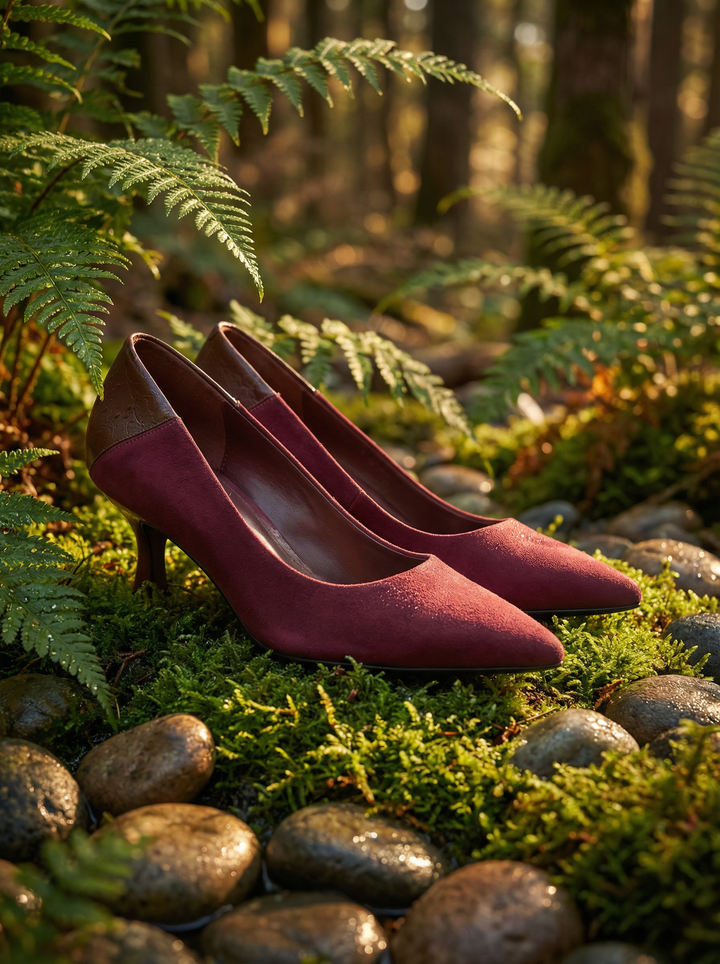
Our Cactus Collection includes styles across formal, evening, and casual categories — including the Organic Oasis kitten heel, the Rustic Radiance Pumps (a bestseller), and the Eco Glow Heels in cactus eco-pink.
Care Guide for Cactus Leather Shoes
Cactus leather is low-maintenance, but a few habits extend its lifespan significantly:
- Wipe clean with a dry or slightly damp cloth. Do not saturate.
- Avoid prolonged direct sunlight. UV exposure can fade bio-based materials faster than animal leather.
- Use a shoe tree when storing. This preserves the upper shape, especially in heels.
- Apply a natural shoe conditioner every 3–6 months. Look for conditioners free from silicone and petroleum compounds.
- Store in the dust bag provided. Air circulation matters; sealed plastic bags cause moisture build-up.
Is Cactus Leather Right for You?
Choose cactus leather if:
- You want a vegan leather that is genuinely bio-based (not just petroleum plastic labelled "vegan")
- You wear formal, professional, or evening styles
- You're in a humid climate (Singapore, Southeast Asia, tropical regions)
- You want a material with serious sustainability credentials
Consider other materials if:
- You prioritise ultra-softness above structure (try our Corn or Apple collections)
- You want a more casual, textured aesthetic (try Piñatex or Cotton Suede)
Frequently Asked Questions
Is cactus leather waterproof? It is water-resistant — it repels light splashes and humidity. It is not fully waterproof for submersion.
How long does cactus leather last? With standard care, 10+ years. Our shoes are designed for longevity, not seasonal replacement.
Is it certified vegan? Yes. Every AVAR Earth shoe is certified by The Vegan Society, UK — the world's oldest and most rigorous vegan certification body.
Can I wear cactus leather heels in Singapore's humidity? Absolutely. Cactus leather's natural structure handles humidity better than most bio-based alternatives. It doesn't soften or warp under tropical conditions.
Where can I buy cactus leather shoes in Singapore? Directly at avarearth.com with free delivery in Singapore. We are also available at Eco Club Singapore.
The Bottom Line
Cactus leather is one of the most credible bio-based leather alternatives available today. It's not a marketing claim — it's a commercially proven, certified material used by luxury brands globally. For professional women who want to walk confidently knowing exactly what their shoes are made of, it's the clearest answer the sustainable fashion industry has produced.
Explore the AVAR Earth Cactus Collection →
AVAR Earth is a Singapore-based luxury vegan footwear brand certified by The Vegan Society, UK. Every pair is made from 100% plant-based, bio-sourced materials with free delivery across Singapore.

